


Dr. Adetola Shobowale, a family physician at Adelaide Medical Clinic in Toronto, brings a deeply personal and compassionate approach to patient care. With a special interest in LGBTQIA+ care, sexual and reproductive health, and mental health, his work is grounded in a commitment to inclusivity, empathy, and holistic care. His path into medicine was never just a career choice, but a calling that began in childhood, which was shaped by a natural instinct to care for others and a desire to create meaningful, lasting impact in the lives of those he serves.
From an early age, Dr. Shobowale saw himself as a caregiver as he was consistently drawn to helping others. That instinct carried him through medical school in Nigeria, where he first began to understand the breadth of general practice. Although family medicine was not widely recognized as a distinct specialty at the time, his experience working as a general practitioner exposed him to the continuity and depth of patient relationships, which is an experience that would ultimately shape his career path.
His transition from Nigeria to the United Kingdom marked a pivotal shift in his understanding of healthcare, particularly in the realm of mental health. In contrast to the limited recognition and resources available back home, his experience revealed a system where mental health was more openly addressed and supported. What might have once been dismissed as everyday stress was now recognized as something deserving of care and attention. This shift was further amplified during the COVID-19 pandemic, a time when mental health challenges became nearly universal. For Dr. Shobowale, this period was both professionally and personally transformative, deepening his awareness of how anxiety, isolation, and emotional strain can affect anyone.
These experiences have shaped his approach to mental health within primary care. He recognizes that mental health concerns are not always explicitly stated. Often, they reveal themselves through subtle verbal and nonverbal cues, such as changes in sleep patterns, mood, eye contact, or even how a patient presents themselves. For Dr. Shobowale, listening closely and observing attentively are essential tools. He emphasizes that mental health is not separate from physical health, but an integral part of a patient’s overall well-being.
A recurring theme in his practice is the need to normalize conversations around mental health. He has observed that many patients do not initially consider conditions like anxiety or depression to be part of their medical history. Others may feel reluctant to speak openly due to cultural expectations or stigma, particularly among men or within certain communities where vulnerability is often misunderstood as weakness. These moments reinforce his commitment to creating a space where patients feel safe, heard, and supported.
Building trust begins with reassurance, and Dr. Shobowale prioritizes creating a calm and confidential environment where patients feel comfortable sharing their experiences and concerns. He approaches each consultation as a partnership, emphasizing shared decision-making rather than directive care. Whether discussing therapy, lifestyle changes, or medication, he ensures that patients are actively involved in shaping their treatment plans. He also extends his care beyond the consultation room by following up with patients who miss appointments or checking in during difficult periods, small gestures that often leave a lasting impact.
His approach is also carefully tailored across different age groups. For children and adolescents, mental health concerns may present through behavioural changes, academic struggles, or withdrawal, requiring close collaboration with caregivers and attention to safeguarding. Among adults, challenges often stem from stress, relationships, or work-related pressures, making it essential to identify underlying triggers. For older adults, issues such as loneliness, grief, and cognitive decline come to the forefront, often requiring a more integrated, multidisciplinary approach. Across all stages of life, Dr. Shobowale emphasizes the importance of recognizing risk, ensuring safety, and providing compassionate, individualized care.
Despite his commitment, he acknowledges the broader systemic challenges that continue to affect patient care. Access to mental health services remains a significant barrier, particularly in Canada. Long wait times and limited access to government funded counselling and therapy services, limited availability of publicly funded services, and geographic disparities often prevent patients from receiving timely care. In some cases, patients must travel long distances or rely on private insurance, creating additional financial and other burdens. He also highlights the challenges in accessing timely specialist care, such as psychiatry or public funded diagnostic services for conditions like ADHD, where delays can significantly impact treatment and outcome.
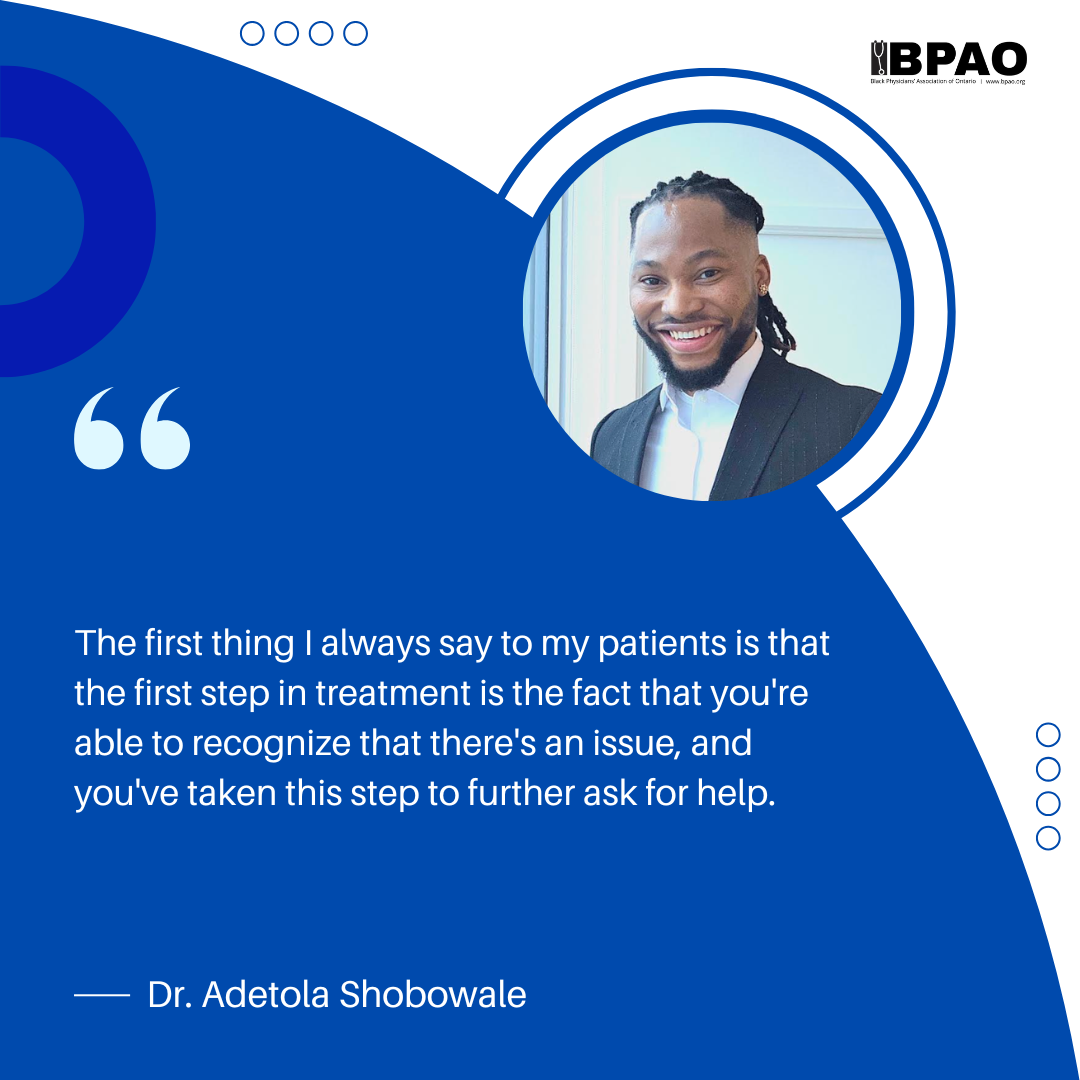
Addressing stigma remains another critical aspect of his work, and he believes that education is one of the most powerful tools in changing perceptions. By helping patients understand that mental health conditions extend beyond just depression or anxiety and include stress, burnout, and sleep disturbances. Dr. Shobowale works to broaden awareness and encourage early intervention. He often reminds patients that seeking help is not a sign of weakness, but a necessary and courageous step toward healing. His perspective on mental health is also shaped by personal experience. After losing his mother at the start of medical school, he faced his own struggles in silence, without access to adequate support. Reflecting on that time, he recognizes the impact of stigma and the importance of seeking help. This lived experience now informs his practice, strengthening his empathy and reinforcing his commitment to ensuring that no patient feels they have to navigate their challenges alone.
Looking ahead, Dr. Shobowale envisions a healthcare system in which mental health is more seamlessly integrated into primary care. He advocates for improved access to therapy, faster referral pathways to specialists, and the inclusion of mental health practitioners within primary care teams. He also emphasizes the importance of cultural sensitivity and early education, ensuring that awareness begins at a young age and extends across all communities.
For Dr. Shobowale, the most rewarding part of his work lies in the relationships he builds with his patients. Whether it is a simple thank you, a patient expressing that they feel heard, or witnessing someone’s progress over time, these moments reaffirm his purpose. He values the continuity of care that family medicine provides, the ability to support patients through different stages of their lives, to follow their journeys, and to see the impact of compassionate, patient-centered care firsthand.
At its core, his work is guided by a belief that medicine is not just about diagnosis or treatment, but about connection. It is about understanding each patient’s story, recognizing their challenges, and walking alongside them toward better health. Through empathy, advocacy, and a commitment to equity, Dr. Adetola Shobowale continues to make a lasting difference in the lives of the patients and communities he serves.