

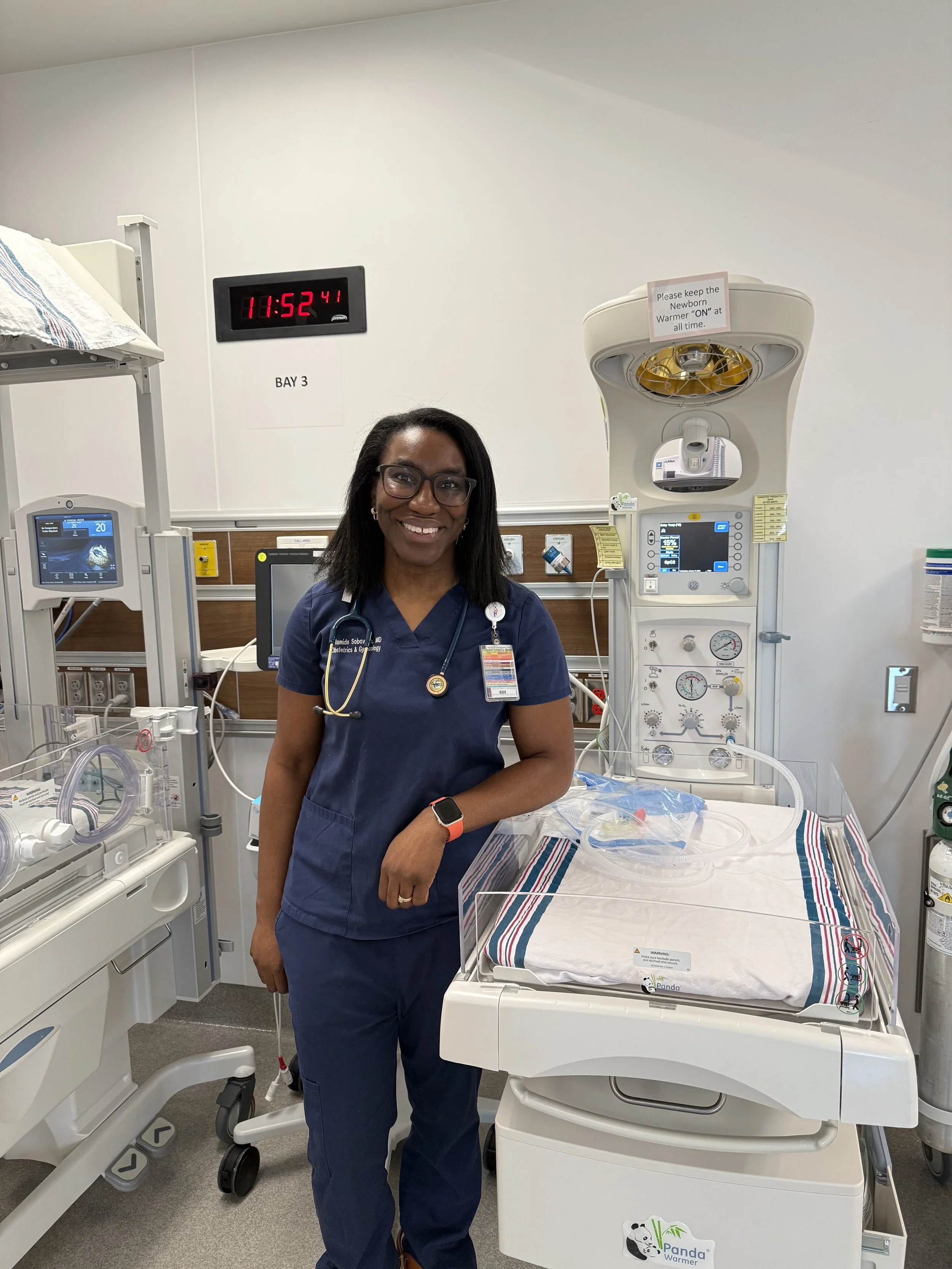
Dr. Olamide Sobowale, Chief of Obstetrics and Gynaecology and Medical Director of the Woman and Child Program at Mackenzie Health, leads with purpose and passion. Also serving as Simulation Lead at York University’s School of Medicine, her path into medicine reflects a blend of curiosity and compassion. What began as a love of jigsaw puzzles evolved into a calling, one that lets her make a meaningful impact every day. She describes medicine as “problem-solving at its finest,” where each patient interaction is a chance to understand, support, and empower. Although she once imagined a future in neurosurgery or cardiothoracic surgery, she ultimately chose obstetrics and gynaecology for its hands-on care, deep human connection, and the privilege of supporting patients through some of life’s most significant moments.
Unlike specialties where patient interactions may be brief, Dr. Sobowale was drawn to the long-term relationships at the heart of OB/GYN. She embraced the opportunity to walk alongside patients through transformative seasons, from pregnancy and postpartum care to menopause and beyond, offering both clinical expertise and steady support. In training, she recalls that while other rotations often felt like milestones to complete, OB/GYN was different: she never found herself watching the clock. Even during long hours, she felt energized, fully engaged, and eager to keep learning. In that space, she didn’t just discover a passion, she found where she was meant to be.
Over time, Dr. Sobowale’s approach has been shaped not only by training, but by every patient she has had the privilege to care for, reinforcing that medicine is as much about humanity as it is about science. One especially meaningful experience involved a young patient facing an ovarian cancer diagnosis. In that moment, she saw not only the medical complexity, but also the fear and uncertainty the patient and her family carried. It was a powerful reminder that beyond clinical decisions, patients need empathy, reassurance, and clear, compassionate communication.
Experiences like these continue to shape her perspective, reminding her that medicine is not defined solely by diagnosis and treatment, but by presence and showing up in patients’ most vulnerable moments. Even small gestures, taking an extra moment to listen or offering words of hope, can leave a lasting impact long after the encounter ends.
At the core of Dr. Sobowale’s practice is patient-centered care grounded in listening, trust, and collaboration. She aims to create a safe, open environment where patients feel comfortable sharing concerns, approaching healthcare as a partnership rather than a directive. Recognizing that each patient arrives with different experiences, understanding, and anxieties, she prioritizes meeting them where they are. Through open communication and early attention to concerns, she works to reduce anxiety and build trust. For Dr. Sobowale, patients are active participants in their health journey, supported through shared decision-making and meaningful dialogue.
This philosophy is especially important in the lens of broader systemic challenges, particularly in the context of Black maternal health. Dr. Sobowale emphasizes that disparities in outcomes are rarely the result of a single cause, but the intersection of structural, cultural, and historical factors that shape access and experience over time. From geographic barriers and limited access to deep-rooted mistrust stemming from historical injustices, the challenges are complex and require intentional, multifaceted solutions. For her, progress begins with action such as strengthening cultural competence, deepening community engagement, and improving representation within healthcare systems. Trust is not given, she notes; it is built through consistent presence, understanding, and respect. By acknowledging these realities and adapting care to reflect diverse needs, she underscores that healthcare can not only treat, but help transform outcomes and move toward true equity.
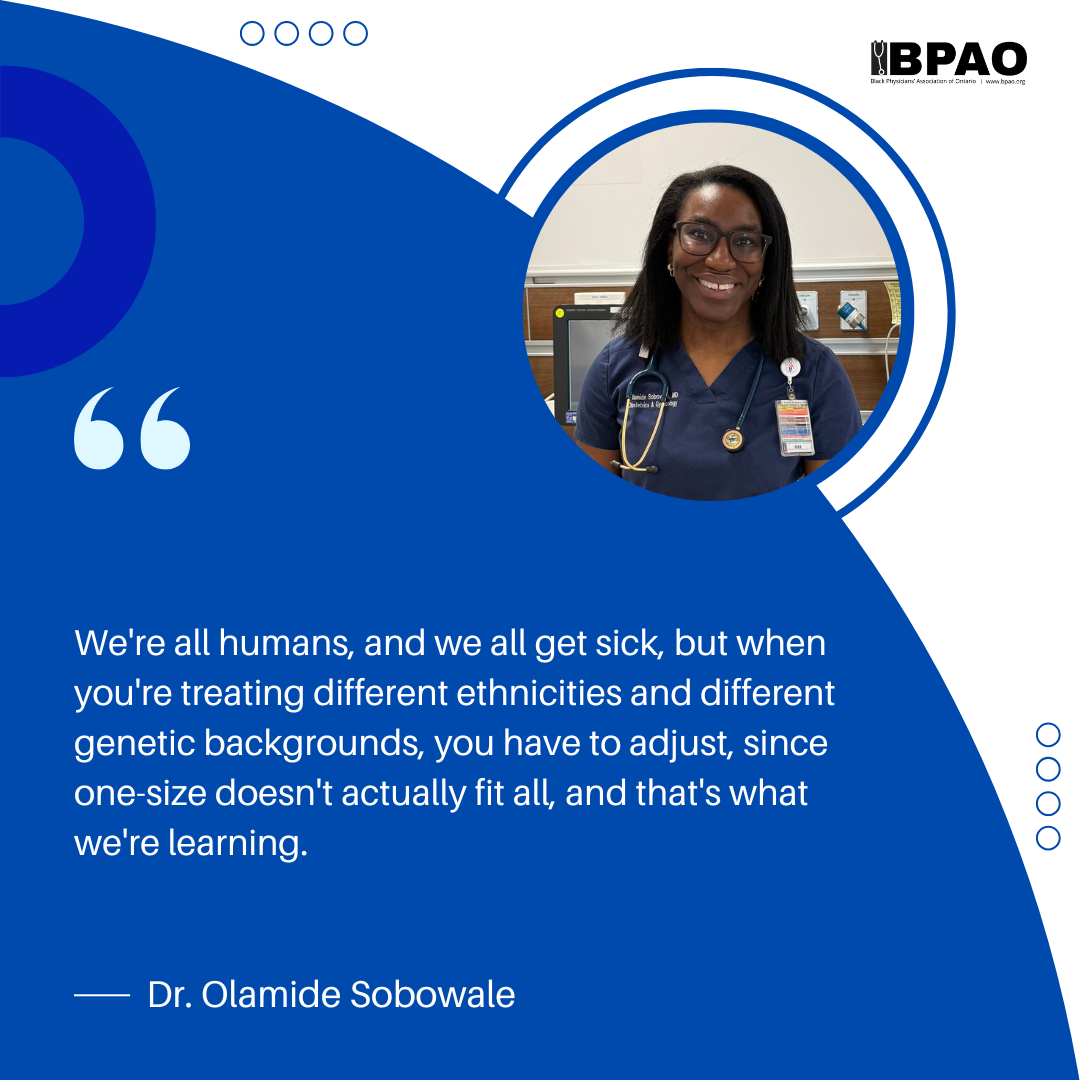
In relation to Obstetrics and Gynecology, access to care remains one of the most pressing challenges in the field. Dr. Sobowale highlights a growing imbalance between demand for care and the number of available providers, underscoring a system under increasing pressure. Yet she also sees an opportunity to think differently, act boldly and innovate with purpose. With limited resources and rising needs, she recognizes that meaningful change won’t come from a single solution, but from reimagining how care is delivered. Whether through technology, more integrated models, or new approaches to service delivery, she believes the future depends on expanding access without sacrificing quality. Addressing these gaps, she says, will require creativity, collaboration, and the courage to build a system that meets people where they are and leaves none behind.
Looking ahead, Dr. Sobowale hopes to help shape a healthcare environment where patients consistently feel heard, valued, and supported. She reflects on how often patients express gratitude simply for being listened to, moments that are meaningful but also highlight gaps in the system. For her, care must go beyond treatment. Each interaction should be intentional, personalized, and empowering. She envisions patients as active participants in their care, confident in their voices, included in decisions, and supported throughout their healthcare journey.
While support for her patients has been a focus for Dr. Sobowale, mentorship has played a defining role in her journey. Mentors have acted as a network of support that have guided her at key moments. Along the way, mentors recognized her potential and encouraged her to step into it by opening doors to leadership opportunities, advocating for her, and offering steady guidance. One mentor, in particular, encouraged her to pursue a physician leadership course, an experience that broadened her perspective and strengthened her ability to lead with intention and confidence.
These moments of support shaped not only her career, but her philosophy of leadership. For Dr. Sobowale, leadership isn’t about holding authority; it’s about lifting others, creating opportunities, and empowering those around you. She believes leadership is measured not by what one accomplishes alone, but by the success of those you help rise. The most meaningful legacy, she reflects, is stepping back and watching others thrive, knowing you played a part in their journey forward.
Ultimately, the most rewarding part of Dr. Sobowale’s work is knowing she made a difference in someone’s experience. She compares her role to that of a teacher: someone who may be present for only a brief moment in a person’s journey, yet whose influence can last far beyond the encounter.
Dr. Sobowale’s journey is a commitment to compassionate, patient-centered care, one that recognizes medicine is not only about solving clinical problems, but about seeing each person beyond their chart. It means understanding their story, supporting them through vulnerability, and empowering them to take an active role in their health and healing.