

Beyond the Diagnosis: Dr. Malcolm Blagrove’s Journey to Transforming How We Care
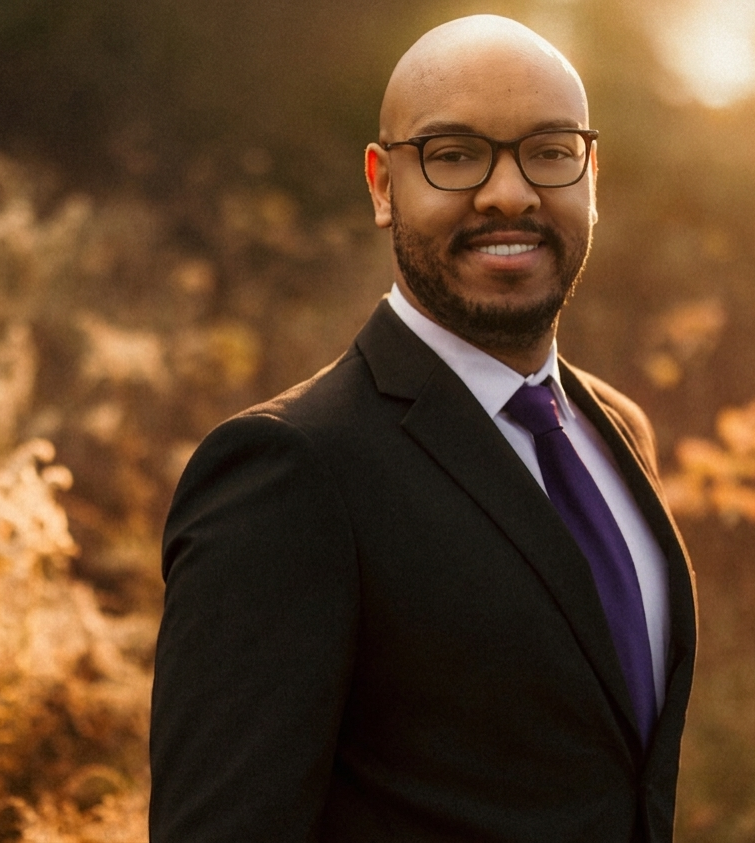
Dr. Malcolm Blagrove is an internal medicine physician and respirologist who practices respirology and sleep medicine. His journey into medicine is a story shaped not by tradition but by curiosity, exploration, and a willingness to follow where his interests led. Coming from a family rooted in business and the arts rather than healthcare, his path was far from conventional. Early on, he was drawn to the complexities of neuroscience, psychology, and social dynamics, which are fields that sparked a deep curiosity about how people think, behave, and experience the world around them. That curiosity took form during an internship at the Centre for Addiction and Mental Health in Toronto, where he was immersed in an environment that blended science with human experience. Initially envisioning a future in research-based science, this experience became a turning point.
Unlike many who enter training with a fixed speciality in mind, Dr. Blagrove approached his training with an open mind and curiosity, allowing his experiences to guide him. During his internal medicine residency, he explored a range of specialities, including cardiology, gastroenterology, and rheumatology, before ultimately finding his niche in respirology. In respirology, he discovered a field that allowed him to witness the full trajectory of illness, including how diseases develop, how they can be managed, and, in many cases, how patients can recover. Combined with procedural work and his additional focus on sleep medicine, the speciality of respirology offered both intellectual challenge and created opportunities for meaningful patient-physician interactions.
Over time, Dr. Blagrove’s understanding of patient care grew into something far deeper than diagnosis and treatment alone. Like many residents, he began his journey focused on precision, ensuring the diagnosis was accurate, developing the optimal management plan, and meeting the expectations of his mentors. However, repeated encounters with patients returning to the hospital revealed a deeper reality, that even the most accurate treatment plans can fall short if they do not align with a patient’s lived circumstances. He began to recognize how profoundly respiratory health is shaped by social determinants, including housing conditions, occupational exposures, access to medications, and financial constraints. Managing asthma or COPD becomes significantly more difficult when patients live in environments with mold, smoke exposure, or longstanding industrial pollutants. These experiences reshaped his approach to care. Instead of focusing solely on what was clinically ideal, he began to prioritize compassion, understanding, and a commitment to meeting patients where they are.
Throughout Dr. Blagrove’s journey, mentorship has been a guiding force, with many clinical mentors shaping his growth during residency and fellowship. Yet, one of the most profound lessons he carries with him to this day came from an unexpected place. During his respirology fellowship, he formed a connection with a hospital custodian whose presence left a lasting impact. Day after day, this custodian approached his work with pride, consistency, and genuine kindness. Regardless of status, he treated everyone with the same level of dignity and respect. That refreshing and powerful example reshaped Dr. Blagrove's understanding of excellence. He came to realize that medicine is not defined by knowledge alone, but by how that knowledge is delivered, revealing how compassion, patience, and respect are universally essential. As such, that lesson continues to guide him, allowing him to remain grounded in the belief that while clinical skill is vital, it is humanity that truly defines the care we give in the fast-paced, high-pressure world of healthcare.
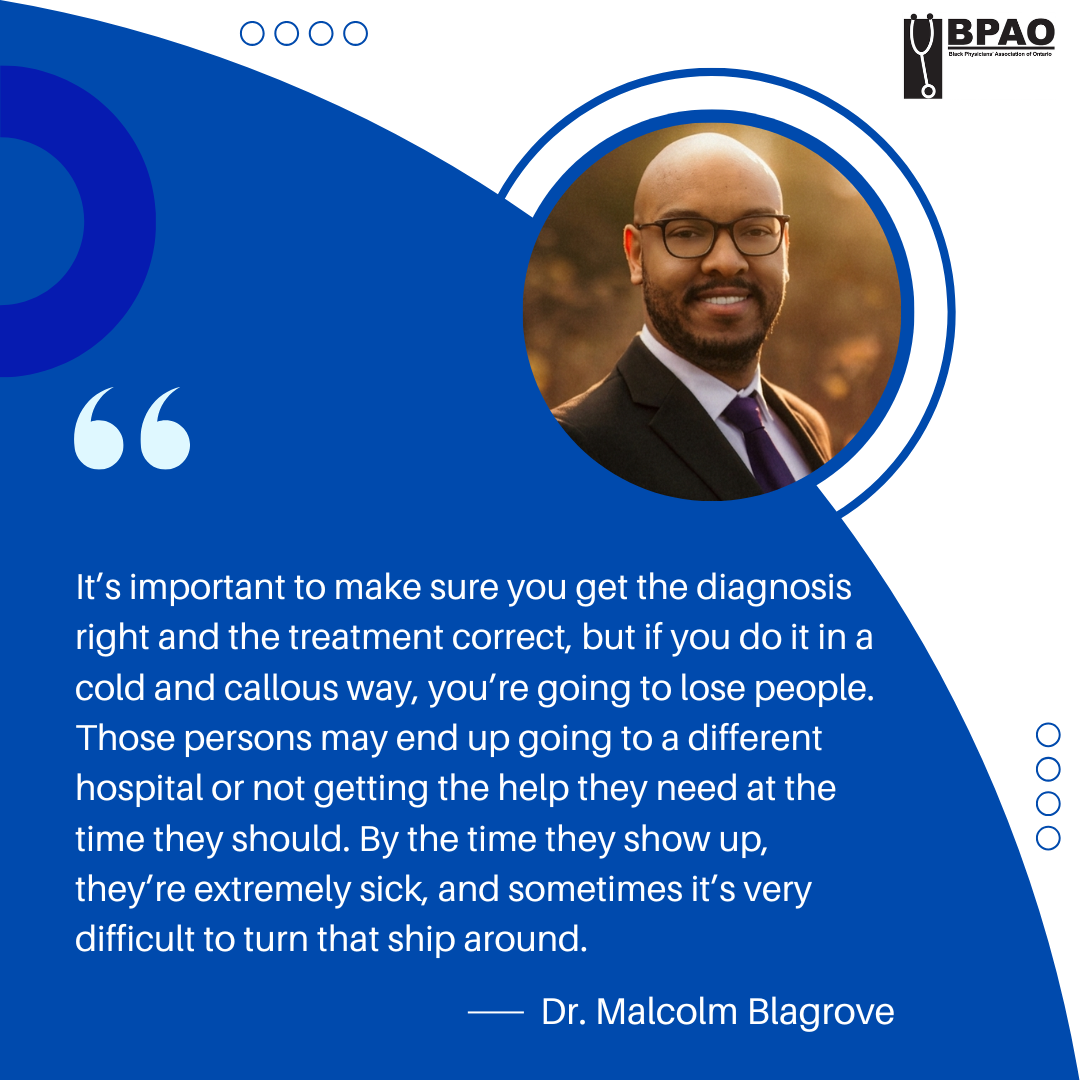
Through Dr. Blagrove's experiences, communication has become a defining pillar in his approach to care, as he has come to understand that many patients live with chronic respiratory conditions without truly knowing what they are facing or how their everyday environments shape their health. It is noteworthy to mention that rather than assuming understanding, he made it his mission to meet patients where they are. In addition, Dr. Blagrove is dedicated to translating complex medical language into conversations that feel genuine, relatable, and empowering. By connecting medical knowledge to each patient’s lived experience, he helped turn confusion into clarity and uncertainty into confidence. Furthermore, he recognized that healing rarely happens alone, which is why he advises inviting family members and caregivers into the conversation to create a circle of support around each patient. In doing so, he not only strengthened understanding but also eased fear and built lasting trust.
This understanding extends into a deeper, more complex conversation, particularly regarding the experiences of racialized communities. Dr. Blagrove recognizes that for many patients, healthcare is shaped not only by biology, but by a history of longstanding disparities, environmental exposures, barriers to access, and, at times, a deep-rooted mistrust of the system itself. Rather than turning away from this reality, he leans into it. He approaches each patient with intention, taking the time to listen, to understand, and to acknowledge their concerns. He acknowledges that trust is not given, but it is built, one conversation at a time. By ensuring his patients feel truly seen and heard, he works to bridge gaps that extend far beyond the realm of medicine. In doing so, he reminds himself and others that meaningful care begins not with assumptions, but with understanding.
Through his work, Dr. Blagrove has identified access to care as one of the most pressing gaps within our current society. For many patients, the journey to better health is not just about treatment, but it begins with overcoming barriers. From the struggle to find a family physician to the overwhelming cost of essential medications such as inhalers, the path to care is often filled with obstacles long before a specialist is ever involved. Dr. Blagrove has witnessed how these delays can quietly shape outcomes, especially in respiratory and sleep disorders, where early diagnosis can make all the difference. For patients in rural or underserved communities, the challenge is even greater, sometimes requiring hours of travel just to receive the care they need. Yet, where there are challenges, Dr. Blagrove sees opportunity. He believes in a future where care is more accessible and equitable through the expansion of virtual healthcare, stronger collaboration across healthcare teams, and a greater emphasis on early screening. Revealing how closing these gaps is not just a goal but a responsibility, and a step toward a system that truly serves everyone.
In a discussion about Dr. Blagrove’s most rewarding aspect of medicine, it was revealed that it truly lies in its human impact. It’s in the moment a patient finally takes a full, easy breath after struggling for so long. It’s in helping someone make sense of a condition they’ve lived with for years without answers. And sometimes, it’s simply in being present, standing beside patients and families during their most difficult moments. Even in cases where outcomes are not favourable, he finds value in fostering a genuine connection with patients, sharing in their experiences, and remaining grounded in the purpose that drew him to medicine in the first place.
At its core, Dr. Blagrove’s work embodies a simple yet powerful principle that medicine is not just about treating disease, but about caring for people.