


Dawn’s path to advocacy is shaped by lived experience that begins early and deepens over time. Born in Barbados and raised in Toronto after migrating to Canada at the age of three, she built a career in the health sector while navigating profound personal loss. Supporting her mother through a long battle with multiple myeloma, followed by her own diagnosis with triple negative breast cancer, and later her father’s passing from esophageal cancer, revealed the critical role of advocacy in care. These experiences underscored how easily important details can be missed when patients and families are not actively involved. Over years of navigating appointments, decisions, and uncertainty, Dawn came to understand that knowledge, time, and engagement are essential to protecting patients and supporting loved ones through illness.
Navigating the healthcare system as a patient, revealed gaps that guidelines alone do not account for, particularly for Black women. At age 40, Dawn attempted to initiate breast cancer screening but was advised to wait until age 50. Four years later, she was diagnosed with triple negative breast cancer. When she asked how earlier detection might have been possible, she was told there were no previous scans for comparison, highlighting how her proactive request could have changed the course of care. That experience became the catalyst for NUY50, a movement named after being told not until you are 50. It exposed the need for culturally responsive care, greater provider awareness, and systems that recognize how disease risk differs across communities. Today, Dawn’s work focuses on closing those gaps so prevention, education, and advocacy lead to better outcomes for everyone.
For Dawn, the most urgent need for change lies in representation across research, policy, and care delivery. She was one of the first patient partners invited to participate in the update of Canada’s breast cancer screening guidelines and the only Black woman on the panel. While the experience highlighted how complex guideline development can be, it also reinforced the importance of including lived experience in shaping equitable policy. Representation, she notes, affects not only decision-making but also trust. Seeing people who look like you in clinical spaces can create a sense of safety that is often missing. To help address this gap, Dawn began creating posters that spotlight triple negative breast cancer and its disproportionate impact on Black women, particularly those of younger ages have been screened too late and dying too soon. Her goal is to ensure Black women see themselves reflected in the spaces where care begins.
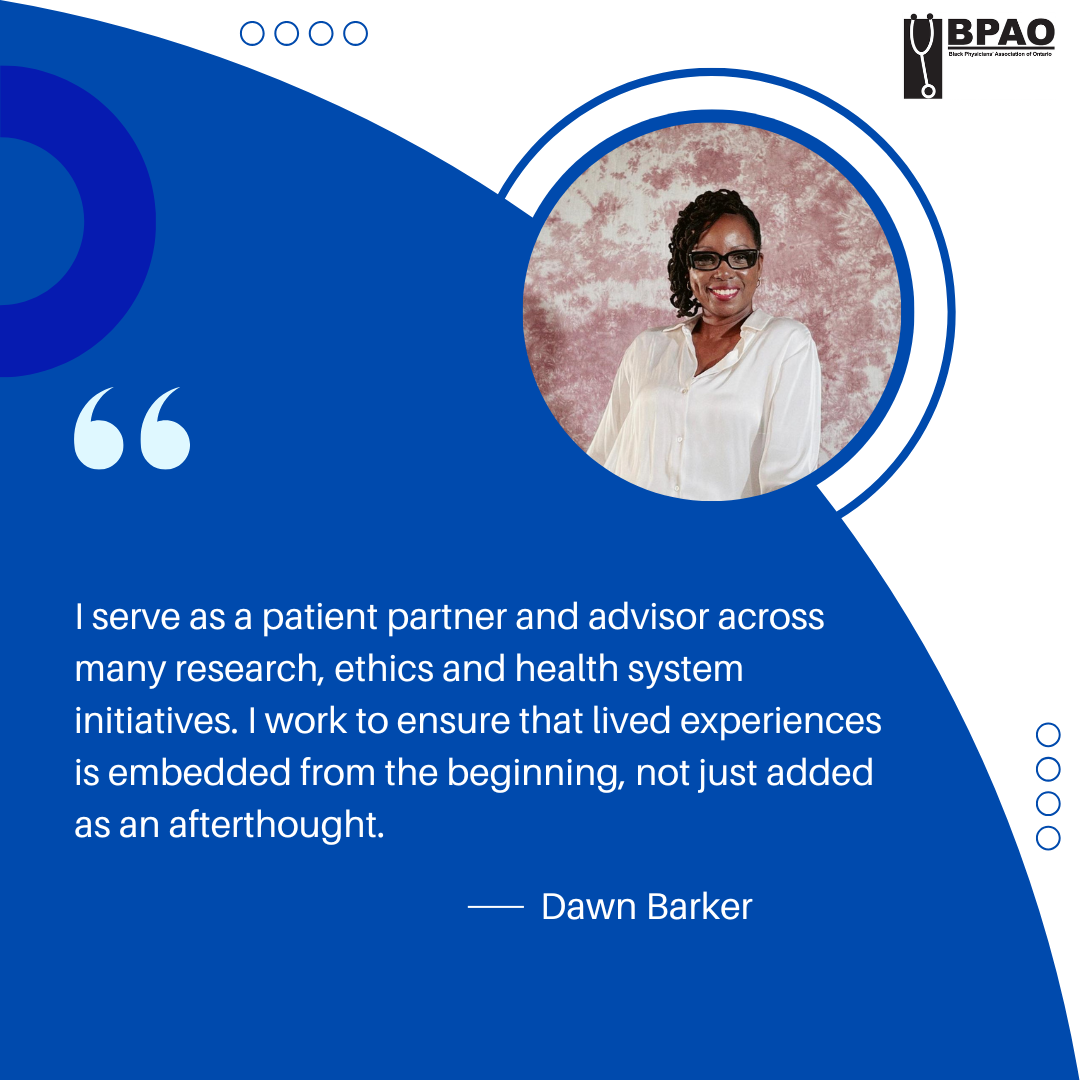
Empowering women, particularly those in BIPOC communities, starts with centering advocacy and lived experience. Through her work as a patient partner and advisor across research, ethics, and health system initiatives, Dawn ensures patient voices are embedded from the outset rather than added as an afterthought. She emphasizes that patients are not just participants but co-creators and knowledge holders whose experiences are essential data. Her advocacy also advances culturally relevant approaches to care and elevates the importance of faith-informed care, recognizing faith as a critical source of strength for many communities of colour. Alongside this, she contributes to efforts that improve representation in research and biobanking and uses storytelling to bridge the gap between lived experience and research, helping shape more inclusive and responsive healthcare systems.
For Dawn, keeping community at the center of the work means creating a sense of belonging, understanding, and shared strength. She sees community as essential to survival and healing, especially during illness, noting that no one is meant to navigate hardship alone. That belief inspired a deeply personal project: inspirational cancer journey cards, developed over more than two years and drawn directly from her lived experience. Each message is intentionally written to offer encouragement, presence, and hope during moments of isolation. Designed to support emotional and mental well-being, the cards serve as a gentle reminder that someone is standing in the gap, even in quiet moments when support feels distant. Believing this is what community looks like in practice, connection, care, and compassion made tangible.
February marks World Cancer Day, and Dawn’s message to those navigating cancer and their families is simple: Don’t Wait, Advocate ©. She encourages trusting your instincts and speaking up when something feels off for yourself or a loved one. Also highlighting that advocacy is not limited to healthcare, it applies to all areas of life. By asking questions, raising concerns, and amplifying voices, patients, caregivers, and healthcare leaders can help shift the narrative. Waiting passively can allow opportunities and needs to be missed, while proactive advocacy empowers individuals and strengthens support for everyone on the journey. Her tagline Don’t Wait, Advocate © captures this approach and serves as a reminder to act promptly and confidently.
Dawn finds the most joy in paying it forward by helping others rise and providing the support she wished she had during her own cancer journey. Losing her mother just years before her diagnosis left her with limited support while navigating grief and treatment. This experience motivates her to be an anchor for others, offering encouragement, guidance, and a positive presence. She emphasizes the power of mindset, noting that positivity shapes action and outcomes. Her inspirational cancer journey cards serve as a daily source of hope for those navigating treatment. Reflecting on belief and achievement, she shares the words of Henry Ford: “If you think you can or if you think you cannot, you are right.”
Dawn is also a proud mother of three adult children who represent the next generation and a central part of her why. Her work is a reminder that what she does today does not end with her but carries forward to others. Dawn’s journey is a testament to the power of advocacy, community, and resilience. It shows how personal experiences can transform into platforms for systemic change and how one voice, when amplified, can inspire others to stand in the gap.